
Alleluia, alleluia.
The Word became flesh and dwelt among us;
to all who did receive him,
he gave the authority to become children of God.
Alleluia.
Gospel: John 1:29-34
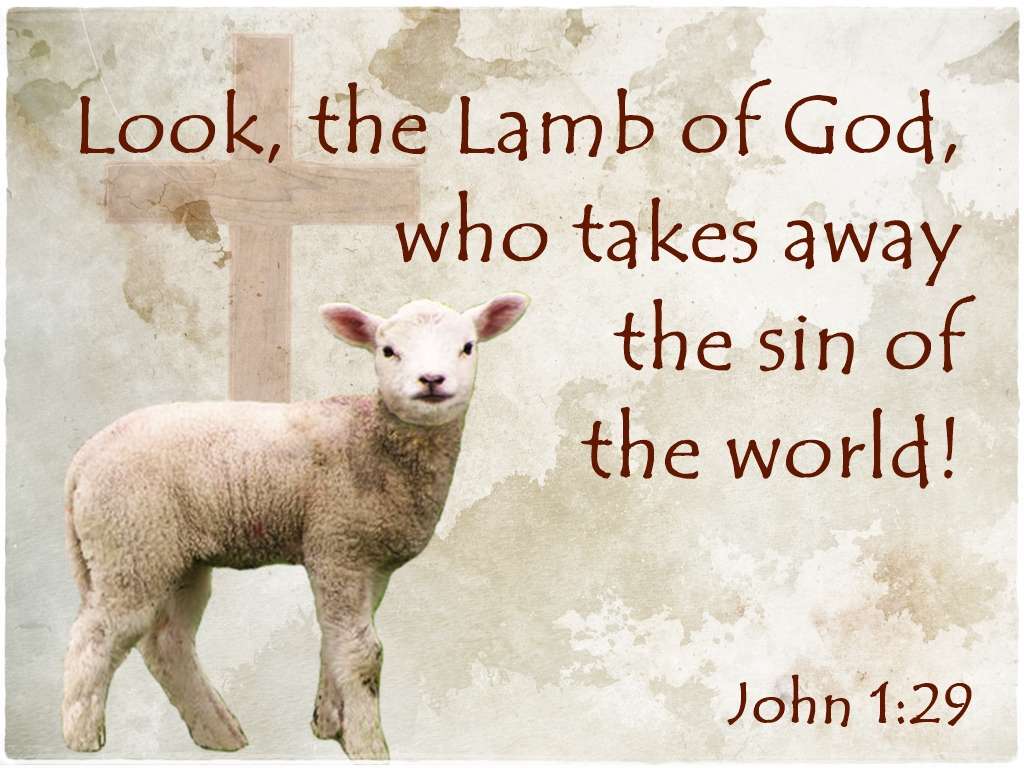
‘Behold, the Lamb of God, who takes away the sin of the world.’
At that time: John saw Jesus coming towards him, and said, ‘Behold, the Lamb of God, who takes away the sin of the world! This is he of whom I said, “After me comes a man who ranks before me, because he was before me.” I myself did not know him, but for this purpose I came baptising with water, that he might be revealed to Israel.’ And John bore witness: ‘I saw the Spirit descend from heaven like a dove, and it remained on him. I myself did not know him, but he who sent me to baptise with water said to me, “He on whom you see the Spirit descend and remain, this is he who baptises with the Holy Spirit.” And I have seen and have borne witness that this is the Son of God.’
Almighty God, ruler of all things in heaven and on earth, listen favourably to the prayer of your people, and grant us your peace in our day.
Through our Lord Jesus Christ, your Son,
who lives and reigns with you in the unity of the Holy Spirit, God, for ever and ever.
Amen.
Notes from meeting on 13 January 2026
Picture of Our Blessed Mother surrounded by a huge Light emanating from her, within her and pouring out of her!
“My dear little children,
I carried my Son in my womb and then brought Him forth for you!
The Light that shines from me is the Holy Love of Jesus my Son!
This same light, The Light of Love that is carried and penetrates everything I do on behalf of the Spirit, my Son Jesus and God the Father, is the same Light of Love I impart to you.
I wish you to carry this Light and Love to poor souls who do not know Jesus, I wish you to be merciful to those whose will is stubborn, I ask you to be an example to them, pray for them and act as Jesus would to them.
This year my little ones I ask you to pray ardently for those far from God, bring them to Jesus, show them the Way that they might also come to know the Love and the Light of my Son.
I Mary Mother of Jesus place my maternal blessing upon you, together we will do the Holy Will of the Father, we will bring Light into the darkest of places and through sacrifices and prayer draw men to my Son.
Do not worry about your families, pray for them, all will be well under my maternal mantle.
My little ones pray for my Priest sons, their burdens are heavier than ever before, pray the Holy Spirit to impart all the gifts they need, bless them my children.
Mary"
Psalm 139
Intercessions
I am the salvation of the people, says the Lord. Should they cry to me in any distress, I will hear them, and I will be their Lord for ever...
We ask the Lord's Blessing on us at the start of a New Year.
We pray in reparation for all offences against the life and dignity of the human person from conception until natural death. Lord have mercy on us!
Pray for our new Pope, Leo XIV, that he may shepherd the Church and proclaim Christ to the World.
Pope’s Prayer Intention – January 2026
For prayer with the Word of God
Let us pray that praying with the Word of God be nourishment for our lives and a source of
hope in our communities, helping us to build a more fraternal and missionary Church.
Lord give us a spirit of Hope in this Holy Year of Hope.
Sacred Heart of Jesus have Mercy on us.
Immaculate Heart of Mary pray for us.
We pray for all who are ill in mind body or spirit and all those in any need or difficulty.
(as we begin the new year, If you have any specific prayer intentions please let me know)
Pray for upbuilding of Marriage and Family.
Pray for peace in our Country and our communities.
Pray for our young people that they may be protected from the evil one, that they may find a home in the loving Heart of Jesus.
Pray for all in our Parishes who are ill in body, mind or spirit.
Pray for Disha that he may find employment.
Pray for all those we have been asked and have promised to pray for.
Pray for all who are grieving give them strength, consolation and healing.
Pray for our Priests and for vocations to the Priesthood.
Pray for lost souls.
Pray for the conversion of the World.
Lord we continue to pray for Peace in Ukraine and in Israel and Gaza and throughout the World.
Lord we pray for persecuted Christians throughout the World.
Lord we pray for an outpouring of the Holy Spirit on all peoples and nations.
Pray for the Holy Souls in Purgatory may they be granted eternal rest.
Mary, Mother of God, Theotokos, pray for us.
Mary Queen of Peace, pray for us.
Mary, Bride of the Spirit, pray for us.
If anyone has any prophecy, prayers, readings or intercessions I encourage you to please send them to
me. Let us share with one another the gifts and inspirations of the Spirit!
Also if there any changes necessary to the intercessions - please let me know
Resources
1.Theotokos Prayer Group:
https://www.facebook.com/Theotokos-Prayer-Group-142398089120415
/http://theotokosprayergroup.blogspot.co.uk/
2. Daily Mass readings can be found at:
https://universalis.com/mass.htm
3. Bishops Conference of England and Wales Website -
https://www.cbcew.org.uk
4. Diocese of Hexham & Newcastle Website:
Home - Diocese of Hexham & Newcastle (diocesehn.org.uk)
5. Catholic Charismatic Renewal International
https://www.charis.international/en/home/
6. Celebrate Conference website
https://www.celebratetrust.org/
7. CHARIS in England and Wales
https://www.charisuk.com/
8.CaFE - Catholic Faith Exploration (faithcafe.org)
9. The Holy See
https://www.vatican.va/content/vatican/en.html
Events
Our next meeting is on 20 January 2026 at 7.30pm in The Creche in St Patricks Church, Glenfield Road, Fairfield, Stockton TS19 7PL. All welcome.
POPE LEO XIV
GENERAL AUDIENCE
Audience Hall
Wednesday, 14 January 2026
___________________________________
Catechesis. The Documents of Vatican Council II. I. Dogmatic Constitution Dei Verbum. 1. God speaks to men as to friends (Reading: Jn 15:15)
Dear brothers and sisters, good morning and welcome!
We have started the cycle of catechesis on Vatican Council II. Today we will begin to look more closely at the Dogmatic Constitution Dei Verbum, on the divine Revelation. It is one of the most beautiful and important of the Council and, to introduce it, it may be helpful to recall the words of Jesus: “No longer do I call you servants, for the servant does not know what his master is doing; but I have called you friends, for all that I have heard from my Father I have made known to you” (Jn 15:15). This is a fundamental point of Christian faith, which Dei Verbum reminds us of: Jesus Christ radically transforms man’s relationship with God, which is henceforth a relationship of friendship. Therefore, the only condition of the new covenant is love.
Saint Augustine, commenting on this passage of the Fourth Gospel, insists on the perspective of grace, which alone can make us friends of God in his Son (Commentary on the Gospel of John, Homily 86). Indeed, an ancient motto stated: “Amicitia aut pares invenit, aut facit”, “friendship is born between equals, or makes them so”. We are not equal to God, but God himself makes us similar to Him in his Son.
For this reason, as we can see in all the Scripture, in the Covenant there is a first moment of distance, in which the pact between God and mankind always remains asymmetrical: God is God and we are creatures. However, with the coming of the Son in human flesh, the Covenant opens up to its final purpose: in Jesus, God makes us sons and daughters, and calls us to become like Him, albeit in our fragile humanity. Our resemblance to God, then, is not reached through transgression and sin, as the serpent suggests to Eve (cf. Gen 3:5), but in our relationship with the Son made man.
The words of the Lord Jesus that we have recalled – “I have called you friends” – are reprised in the Constitution Dei Verbum, which affirms: “Through this revelation, therefore, the invisible God (see Col 1:15; 1 Tim 1:17) out of the abundance of His love speaks to men as friends (see Ex 33:11; Jn 15:14-15) and lives among them (see Bar 3:38), so that He may invite and take them into fellowship with Himself” (no. 2). The God of Genesis already conversed with our first parents, engaging in dialogue with them (cf. Dei Verbum, 3); and when this dialogue was interrupted by sin, the Creator did not cease to seek an encounter with his creatures and to establish a covenant with them. In the Christian Revelation, that is, when God became man in his Son in order to seek us out, the dialogue that had been interrupted is restored in a definitive manner: the Covenant is new and eternal, nothing can separate us from his love. The Revelation of God, then, has the dialogical nature of friendship and, as in the experience of human friendship, it does not tolerate silence, but is nurtured by the exchange of true words.
The Constitution Dei Verbum also reminds us of this: God speaks to us. It is important to recognize the difference between words and chatter: this latter stops at the surface and does not achieve communion between people, whereas in authentic relationships, the word serves not only to exchange information and news, but to reveal who we are. The word possesses a revelatory dimension that creates a relationship with the other. In this way, by speaking to us, God reveals himself to us as an Ally who invites us into friendship with Him.
From this perspective, the first attitude to cultivate is listening, so that the divine Word may penetrate our minds and our hearts; at the same time, we are required to speak with God, not to communicate to him what He already knows, but to reveal ourselves to ourselves.
Hence the need for prayer, in which we are called to live and to cultivate friendship with the Lord. This is achieved first of all in liturgical and community prayer, in which we do not decide what to hear from the Word of God, but it is He Himself who speaks to us through the Church; it is then achieved in personal prayer, which takes place in the interiority of the heart and mind. Time dedicated to prayer, meditation and reflection cannot be lacking in the Christian’s day and week. Only when we speak with God can we also speak about Him.
Our experience tells us that friendships can come to an end through a dramatic gesture of rupture, or because of a series of daily acts of neglect that erode the relationship until it is lost. If Jesus calls us to be friends, let us not leave this call unheeded. Let us welcome it, let us take care of this relationship, and we will discover that friendship with God is our salvation.
_____________________________
Summary of the Holy Father's words
Dear brothers and sisters,
We begin our new series of catecheses on the Second Vatican Council by considering Dei Verbum, the Dogmatic Constitution on Divine Revelation. As today’s Scripture reading reminds us, Jesus calls us friends because he has revealed to us everything that he has heard from the Father. It is through Revelation, which reaches its fullness in Jesus, the Word made flesh, that we are invited to share in God’s life as his children in Christ. We are reminded that friendship with God is not only a gift, but also an invitation that requires a response, as in any relationship. To cultivate this friendship, we must spend time with God in prayer, both personally and especially through the Liturgy, where the community gathers to listen to the word of God with the guidance of the Church. Together, let us respond wholeheartedly to the Lord’s invitation and discover in his friendship the true mystery of our salvation.
____________________________________________________
Special greetings
I extend a warm welcome this morning to all the English-speaking pilgrims and visitors taking part in today’s Audience, especially those coming from Ireland, Australia, Korea and the United States of America. Upon all of you and your families, I invoke the joy and peace of our Lord Jesus Christ. God bless you all!
Audience Hall
Wednesday, 14 January 2026
___________________________________
Catechesis. The Documents of Vatican Council II. I. Dogmatic Constitution Dei Verbum. 1. God speaks to men as to friends (Reading: Jn 15:15)
Dear brothers and sisters, good morning and welcome!
We have started the cycle of catechesis on Vatican Council II. Today we will begin to look more closely at the Dogmatic Constitution Dei Verbum, on the divine Revelation. It is one of the most beautiful and important of the Council and, to introduce it, it may be helpful to recall the words of Jesus: “No longer do I call you servants, for the servant does not know what his master is doing; but I have called you friends, for all that I have heard from my Father I have made known to you” (Jn 15:15). This is a fundamental point of Christian faith, which Dei Verbum reminds us of: Jesus Christ radically transforms man’s relationship with God, which is henceforth a relationship of friendship. Therefore, the only condition of the new covenant is love.
Saint Augustine, commenting on this passage of the Fourth Gospel, insists on the perspective of grace, which alone can make us friends of God in his Son (Commentary on the Gospel of John, Homily 86). Indeed, an ancient motto stated: “Amicitia aut pares invenit, aut facit”, “friendship is born between equals, or makes them so”. We are not equal to God, but God himself makes us similar to Him in his Son.
For this reason, as we can see in all the Scripture, in the Covenant there is a first moment of distance, in which the pact between God and mankind always remains asymmetrical: God is God and we are creatures. However, with the coming of the Son in human flesh, the Covenant opens up to its final purpose: in Jesus, God makes us sons and daughters, and calls us to become like Him, albeit in our fragile humanity. Our resemblance to God, then, is not reached through transgression and sin, as the serpent suggests to Eve (cf. Gen 3:5), but in our relationship with the Son made man.
The words of the Lord Jesus that we have recalled – “I have called you friends” – are reprised in the Constitution Dei Verbum, which affirms: “Through this revelation, therefore, the invisible God (see Col 1:15; 1 Tim 1:17) out of the abundance of His love speaks to men as friends (see Ex 33:11; Jn 15:14-15) and lives among them (see Bar 3:38), so that He may invite and take them into fellowship with Himself” (no. 2). The God of Genesis already conversed with our first parents, engaging in dialogue with them (cf. Dei Verbum, 3); and when this dialogue was interrupted by sin, the Creator did not cease to seek an encounter with his creatures and to establish a covenant with them. In the Christian Revelation, that is, when God became man in his Son in order to seek us out, the dialogue that had been interrupted is restored in a definitive manner: the Covenant is new and eternal, nothing can separate us from his love. The Revelation of God, then, has the dialogical nature of friendship and, as in the experience of human friendship, it does not tolerate silence, but is nurtured by the exchange of true words.
The Constitution Dei Verbum also reminds us of this: God speaks to us. It is important to recognize the difference between words and chatter: this latter stops at the surface and does not achieve communion between people, whereas in authentic relationships, the word serves not only to exchange information and news, but to reveal who we are. The word possesses a revelatory dimension that creates a relationship with the other. In this way, by speaking to us, God reveals himself to us as an Ally who invites us into friendship with Him.
From this perspective, the first attitude to cultivate is listening, so that the divine Word may penetrate our minds and our hearts; at the same time, we are required to speak with God, not to communicate to him what He already knows, but to reveal ourselves to ourselves.
Hence the need for prayer, in which we are called to live and to cultivate friendship with the Lord. This is achieved first of all in liturgical and community prayer, in which we do not decide what to hear from the Word of God, but it is He Himself who speaks to us through the Church; it is then achieved in personal prayer, which takes place in the interiority of the heart and mind. Time dedicated to prayer, meditation and reflection cannot be lacking in the Christian’s day and week. Only when we speak with God can we also speak about Him.
Our experience tells us that friendships can come to an end through a dramatic gesture of rupture, or because of a series of daily acts of neglect that erode the relationship until it is lost. If Jesus calls us to be friends, let us not leave this call unheeded. Let us welcome it, let us take care of this relationship, and we will discover that friendship with God is our salvation.
_____________________________
Summary of the Holy Father's words
Dear brothers and sisters,
We begin our new series of catecheses on the Second Vatican Council by considering Dei Verbum, the Dogmatic Constitution on Divine Revelation. As today’s Scripture reading reminds us, Jesus calls us friends because he has revealed to us everything that he has heard from the Father. It is through Revelation, which reaches its fullness in Jesus, the Word made flesh, that we are invited to share in God’s life as his children in Christ. We are reminded that friendship with God is not only a gift, but also an invitation that requires a response, as in any relationship. To cultivate this friendship, we must spend time with God in prayer, both personally and especially through the Liturgy, where the community gathers to listen to the word of God with the guidance of the Church. Together, let us respond wholeheartedly to the Lord’s invitation and discover in his friendship the true mystery of our salvation.
____________________________________________________
Special greetings
I extend a warm welcome this morning to all the English-speaking pilgrims and visitors taking part in today’s Audience, especially those coming from Ireland, Australia, Korea and the United States of America. Upon all of you and your families, I invoke the joy and peace of our Lord Jesus Christ. God bless you all!
Pope Leo XIV proclaims Franciscan Jubilee Year for the 800th anniversary of the transit of St. Francis of Assisi
Saint Francis, our brother, you who eight hundred years ago went to meet Sister Death as a man at peace,
intercede for us before the Lord.
You recognized true peace in the Crucifix of San Damiano, teach us to seek in Him the source of all reconciliation that breaks down every wall.
You who, unarmed, crossed the lines of war
and misunderstanding, give us the courage to build bridges where the world raises up boundaries.
In this time afflicted by conflict and division, intercede for us so that we may become peacemakers:
unarmed and disarming witnesses of the peace that comes from Christ.
Amen
LEO PP. XIV


 Posts
Posts


No comments:
Post a Comment